


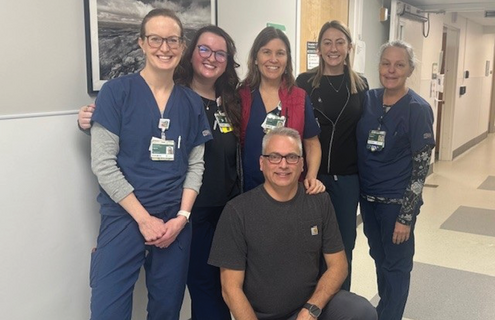
Alice Peck Day Memorial Hospital’s (APD) emergency department (ED) was selected to receive the 2026 Geriatric Emergency Department Accreditation (GEDA) Rural ED Performance Award from the American College of Emergency Physicians (ACEP) for its work improving emergency care for older adults in a rural setting.
The award is part of ACEP’s GEDA program, which was created to recognize emergency departments that demonstrate excellence, innovation, and leadership in caring for older adults. The 2026 GEDA Rural ED Performance Award recognizes rural emergency departments for impactful contributions to geriatric care through collaboration, coordination, and sustained community health improvement.
In 2024, APD, a member of Dartmouth Health, became the first critical access hospital in the United States to achieve Level 1 GEDA from ACEP. Since then, the emergency department has continued to evaluate and improve its care for older adults, implementing 19 geriatric-focused care processes.
“Receiving the GEDA Rural ED Performance Award is a true honor. The work that we do is often behind the scenes, in tiny meaningful moments, so to have it captured on a national level is incredibly rewarding,” said Chelsea Cole, MSN, RN, CEN, clinical nurse supervisor of APD’s ED. “This award belongs to every member of our team who shows up each day with compassion, dedication, and a willingness to go the extra mile. We are motivated to continue to learn, grow, and provide exceptional care for our geriatric patients.”
APD’s geriatric emergency care program focuses on identifying patients’ medical, functional, and social needs. Patients are screened for delirium, potential cognitive impairment, fall risk, substance misuse, and other social determinants of health. Positive screenings are referred to the appropriate resources.
APD’s CARES post-discharge follow-up program is another key component of its approach to geriatric care. Through follow-up calls, geriatric nurse navigator, Missy Beamer, BSN, RN, CEN, helps patients with appointments, connects with primary care providers, and arranges additional services when needed, including home care.
APD has focused on minimizing interventions that can negatively affect older adults, including unnecessary urinary catheterization, prolonged orders to avoid eating, drinking, or taking oral medications, and use of physical restraints. Staff receive ongoing education on these practices and the department tracks compliance.
The emergency department also submitted guidelines for patients who are admitted but remain in the ED while awaiting an inpatient bed. Geriatric patients are prioritized for bed placement and staff monitor patients with delirium to ensure appropriate interventions are in place.
APD works alongside primary care providers, Dartmouth Health’s Aging Resource Center, community health services, and other local resources to help address the challenges older adults can face after an emergency department visit.
“As a rural emergency department, we know that our patients face many barriers,” said Cole. “By taking the time to listen, meeting our patients where they are at, and treating our patients like they are one of our loved ones, we are able to make a difference, whether it be big or small, in the lives of our patients.”
About Alice Peck Day Memorial Hospital (APD)
Known for personalized, high-quality care, Alice Peck Day Memorial Hospital (APD) has been a community-based healthcare organization in the Upper Valley of New Hampshire and Vermont since its founding in 1932. A member of Dartmouth Health, APD has been recognized nationally for quality care. Its areas of clinical excellence include surgical services, primary care, geriatric care, sleep health, and emergency services in partnership with Dartmouth Hitchcock Medical Center. The APD campus is also home to a senior living community with assisted and independent living facilities. Learn more at alicepeckday.org.