



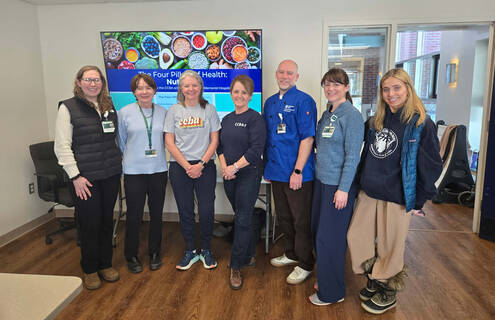
The CCBA (Carter Community Building Association) and Alice Peck Day Memorial Hospital (APD) have partnered to present “The Four Pillars of Health,” a free community wellness series designed to help you improve your overall health and well-being. Each month, health professionals from APD and health and fitness professionals from CCBA offer simple, realistic ways to build healthier habits. Each session is a chance to learn something new, ask questions, and take small steps toward better health.
Dianne Kelecy, MS, RD, LD, Clinical Dietitian at APD and Indoor Cycling Instructor at CCBA, presented the fourth and final session in the series, focusing on nutrition. Kelecy shared how food choices affect health and offered simple tips for building balanced meals.
Processed vs. Whole Foods
Kelecy explained the difference between processed and ultra-processed foods. Processed foods are changed in some way, such as freezing or canning. Ultra-processed foods are often made in factories and may contain added sugar, refined grains, and preservatives.
Choosing more whole foods and fewer ultra-processed foods can support better health.
Building a Balanced Diet
A balanced diet includes the main nutrients your body needs:
- Protein: 10 to 35%
- Carbohydrates: 45 to 65%
- Fat: 20 to 35%
Fiber is also important. Aim for 25 to 35 grams each day from fruits, vegetables, and whole foods. Add fiber slowly and drink plenty of fluids.
The Importance of Protein
Protein helps build muscle and supports many body functions. As we age, we lose muscle, so getting enough protein is important.
Needs vary based on age, activity level, and health. A simple goal is about 30 grams per meal.
Plant-based sources include beans, lentils, tofu, quinoa, nuts, seeds, and protein powders.
Vegan Diets: What to Watch For
Vegan diets can be healthy but need planning. People may not get enough:
- Protein
- Calcium
- Omega-3s
- Zinc
- Vitamin B12
- Vitamin D
Low levels can lead to issues like anemia, muscle loss, and weak bones.
The Mediterranean Diet
Kelecy also reviewed the Mediterranean diet, which supports heart health and overall wellness.
It focuses on:
- Fruits and vegetables
- Whole grains
- Beans and legumes
- Nuts and seeds
- Olive oil
Fish is eaten often. Poultry, eggs, and dairy are eaten in moderation. Red meat and sweets are limited.
This approach also encourages staying active and enjoying meals with others.
Helpful Resources
- MyFitnessPal for tracking meals
- MediterraneanDish.com for recipes
- Yuka app for food ratings