

The CCBA (Carter Community Building Association) and Alice Peck Day Memorial Hospital (APD) have partnered to present “The Four Pillars of Health,” a free community wellness series designed to help you improve your overall health and well-being. Each month, health professionals from APD and health and fitness professionals from CCBA offer simple, [EAO1] realistic ways to build healthier habits. Each session is a chance to learn something new, ask questions among peers, and take small steps toward better health.
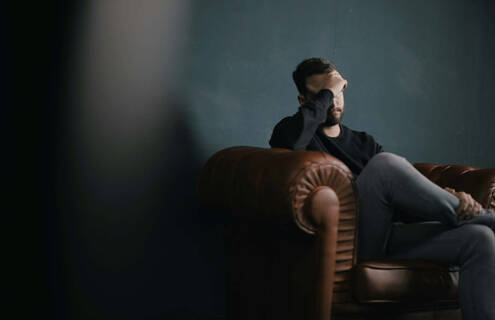
Stress is not always bad – it can motivate us and help us perform at our peak. But too much stress can create health risks.
That’s according to Dr. Anne Johnson, MD, Family Physician at Alice Peck Day Memorial Hospital (APD), who shared insights as part of our ongoing series, “The Four Pillars of Health.” Together with APD’s Casey Kelly, MA, LCMHC, Mental Health Counselor, she discussed stress, the second pillar of health.
“Good” stress, said Dr. Johnson, is about being energized. “We bring increased attention and a healthy focus to something in our day. This kind of stress helps us perform well, no matter what we’re doing.”
Stress effects may impact different parts of the body and disease pathways. Prolonged stress increases the risk of stress-related disease and quality of life.
“Could this just be stress?”
“My patients often ask me if what they are experiencing is “just stress,” Dr. Johnson said. “It could be stress, but that’s still a big part of health. We can’t eliminate all stress from our lives, but there are ways we can manage it. That’s the conversation we should be having.”
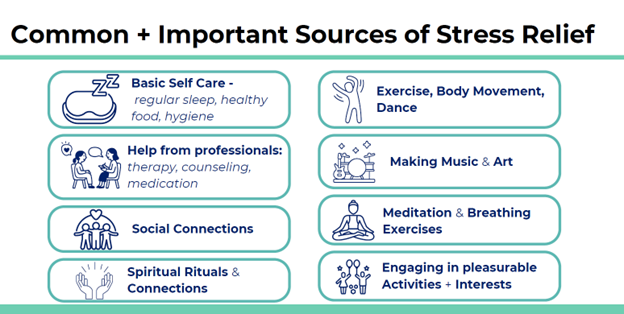
While physicians can prescribe medication to help with sleep, anxiety, depression, or blood pressure, there are other ways of thinking about stress management. “I tell patients, ‘Let’s have a plan for you that incorporates other ways of stress management,” Dr. Johnson said. “Patients often come up with ideas very quickly, like bringing regular exercise or music into their lives. These methods are tried and true, thousand-year-old methods that change our body and signal to us that we are safe. Meditation, breathing, yoga – there’s a reason why these things are so popular.”
Coping skills
Casey Kelly spends much of her time with patients talking about coping skills, or “things we do, both actively and passively, to get to a place where we feel balanced.”
Kelly said active coping skills reduce stress by addressing its source. “For example, if I’m stressed out about a presentation, I’ll set aside time to work on it,” she said. “But sometimes stressors can become overwhelming, and we need to take a break from them.”
Passive coping skills include moving away from the stressor, so that we can care for ourselves in the moment. This might mean going for a walk, taking deep breaths, or talking to a friend, then returning to action at a later time.
“Having a balance of both active and passive skills is best,” said Kelly.
“It’s important to be intentional about how we’re responding to stress and consider how our coping mechanisms are working for us.”
Read about other sessions in The Four Pillars of Health: